
KVS Admission 2026-27: Complete Guide to Eligibility, Age Limit, and Admission Process KVS Admission 2026-27 eligibility guidelines have been officially...
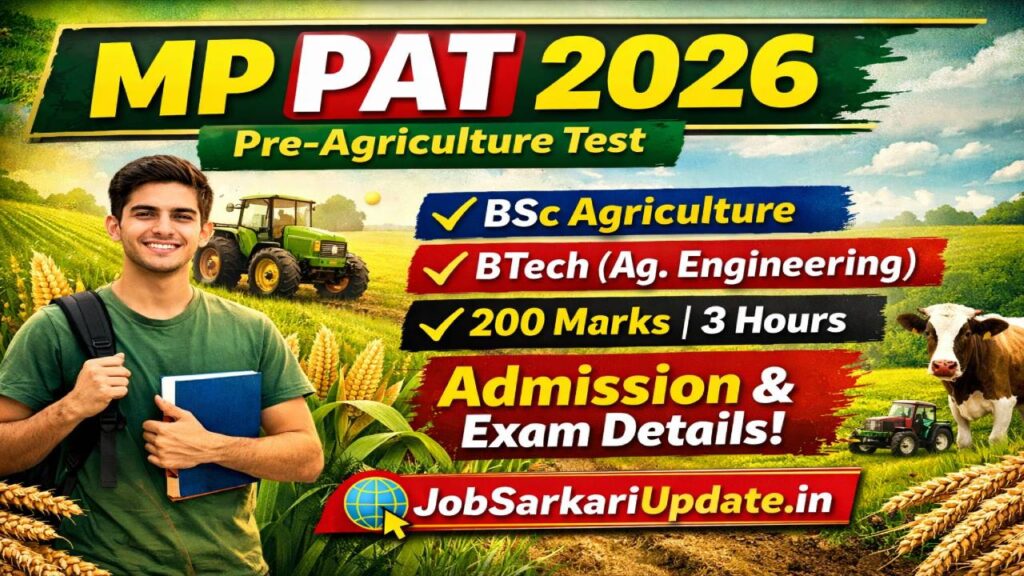
Read Full DetailsMP PAT 2026 – Agriculture Entrance Exam Eligibility & Apply Online
MP PAT 2026 Agriculture Entrance Exam – Complete Guide
The MP PAT 2026 Agriculture Entrance Exam is one of the most important state-level entrance tests for students in Madhya Pradesh who wish to pursue undergraduate programmes in agriculture, horticulture, forestry, and agricultural engineering. Conducted by the Madhya Pradesh Employees Selection Board (MPESB), Bhopal, this examination serves as the gateway to prestigious agricultural universities — Jawaharlal Nehru Krishi Vishwa Vidyalaya (JNKVV), Jabalpur and Rajmata Vijayaraje Scindia Krishi Vishwa Vidyalaya (RVSKVV), Gwalior — along with Mahatma Gandhi Chitrakoot Gramodaya Vishwavidyalaya, Chitrakoot.
The official PAT 2026 rulebook was released in March 2026 by the Madhya Pradesh government’s Department of Farmers Welfare and Agriculture Development. This year, students can apply online from 24 March 2026 to 7 April 2026, with the examination scheduled to begin on 8 May 2026. For students who have completed or are appearing in Class 12 with Physics, Chemistry, Mathematics, Biology, or Agriculture as subjects, PAT 2026 opens doors to four-year BSc (Honours) and BTech programmes.
This is a highly competitive examination given the limited number of government seats available across both agricultural universities. With candidates coming from science and agriculture streams across the entire state, it is wise to begin preparation and the application process at the earliest opportunity. This guide explains every detail — from eligibility and fees to the complete syllabus and step-by-step application process.
Important: This article is for informational purposes only. All dates, fees, and eligibility details are based on the official PAT 2026 rulebook published by MPESB, Bhopal. Candidates must verify all information from the official notification before taking any action.
MP PAT 2026 – Exam Overview
MPESB, Bhopal is a credible and long-established state examination body responsible for conducting multiple competitive and entrance examinations in Madhya Pradesh. The board has a robust online examination infrastructure and follows transparent normalisation methods when exams are held in multiple shifts. PAT (Pre-Agriculture Test) has been held for several years and is recognised across both state agricultural universities. Admission through PAT is merit-based, category-wise, and governed by strict reservation norms as prescribed by the state government.
| Detail | Information |
|---|---|
| Conducting Body | MP Employees Selection Board (MPESB), Bhopal |
| Examination Name | Pre-Agriculture Test (PAT) – 2026 |
| Programmes Covered | BSc (Hons) Agriculture, BSc (Hons) Horticulture, BSc (Hons) Forestry, BTech (Agricultural Engineering), BSc (Ag.) |
| Participating Universities | JNKVV Jabalpur, RVSKVV Gwalior, MGCGV Chitrakoot |
| Job/Study Location | Madhya Pradesh |
| Application Mode | Online (MPOnline portal) |
| Exam Mode | Online (Computer-Based) |
| Total Marks per Paper | 200 |
| Duration | 3 Hours per shift |
MP PAT 2026 – Important Dates
Applying in the very first week after the application window opens is one of the most underrated strategies in competitive exam preparation. Early applicants avoid last-minute technical glitches on the portal, have time to carefully review their form for errors, and can still make corrections within the amendment window. Given that the application period is only 15 days (24 March to 7 April 2026), students who delay even by a few days may find themselves under unnecessary pressure. Mark these dates on your calendar immediately.
| Event | Date |
|---|---|
| Online Application Opens | 24 March 2026 |
| Last Date to Apply | 7 April 2026 |
| Application Amendment Starts | 24 March 2026 |
| Last Date for Amendment | 12 April 2026 |
| Exam Date | Starting 8 May 2026 (Friday) |
| Admit Card Release | To be notified on official MPESB website |
| Result Declaration | To be notified on official MPESB website |
| Counselling / Admission Last Date | 30 September 2026 |
All dates are subject to change. Always verify from the official MPESB notification before taking any action.
MP PAT 2026 – Application Fee
The application fee for PAT 2026 is straightforward and reasonable. General (Unreserved) category candidates pay Rs. 500, while SC, ST, OBC, PwD, and EWS candidates who are domiciled in Madhya Pradesh pay a reduced fee of Rs. 250. Additionally, an MPOnline portal fee applies: Rs. 60 if applying through a kiosk, and Rs. 20 if using the Registered Citizen User login. Payments can be made via Credit Card, Debit Card, or Internet Banking. A common mistake candidates make is closing the browser before the payment confirmation screen fully loads — always wait for the computerised receipt before exiting.
| Category | Exam Fee | Portal Fee (Kiosk) | Portal Fee (Reg. Citizen) |
|---|---|---|---|
| Unreserved (General) | Rs. 500 | Rs. 60 | Rs. 20 |
| SC / ST / OBC / PwD / EWS (MP Domicile) | Rs. 250 | Rs. 60 | Rs. 20 |
| Amendment Fee (per correction) | Rs. 20 | Rs. 40 (portal) | – |
Payment Modes: Credit/Debit Card (all banks), Internet Banking. If you do not have these facilities, visit an authorised MPOnline kiosk with your application number and fee amount in cash.
MP PAT 2026 – Age Limit
One of the most candidate-friendly aspects of PAT 2026 is that there is no minimum or maximum age limit prescribed for admission to any of the four undergraduate programmes (BSc Agriculture, BSc Horticulture, BSc Forestry, BTech Agricultural Engineering). This is explicitly stated in the official rulebook under Section 1.8.2. Students who passed Class 12 several years ago and are re-attempting, or students who are older due to any academic gap, are equally eligible. The only age-related criterion is the domicile and other eligibility conditions, not a numerical age cutoff.
| Programme | Minimum Age | Maximum Age | Age Relaxation |
|---|---|---|---|
| BSc (Hons) Agriculture | No Limit | No Limit | Not Applicable |
| BSc (Hons) Horticulture | No Limit | No Limit | Not Applicable |
| BSc (Hons) Forestry | No Limit | No Limit | Not Applicable |
| BTech (Agricultural Engineering) | No Limit | No Limit | Not Applicable |
Note for BSc Forestry: Physical fitness requirements apply specifically for this programme. Candidates must meet a height of 163 cm, chest expansion of 84 cm (fully expanded) with a minimum 5 cm expansion. Special minimum height of 152.5 cm applies for candidates from Gorkha, Nepali, Garhwali, Kumaoni, Manipur, Tripura, Sikkim, NEFA, Ladakh, and Bhutan backgrounds.
MP PAT 2026 – Eligibility Criteria
The most important thing every candidate must understand about PAT 2026 eligibility is that there are multiple valid subject group combinations for most programmes. Many students mistakenly assume only one combination (like PCB or PCM) is valid, when in fact the Agriculture group is equally accepted. Additionally, students who are currently appearing in Class 12 in the examination year 2026 are permitted to sit for PAT 2026 — but their admission will only be confirmed if they pass Class 12 at the time of counselling. Students who pass Class 12 in a later year, even after securing a rank in PAT 2026, will not be eligible for admission.
| Programme | Accepted Subject Group | Specific Subjects |
|---|---|---|
| BSc (Hons) Agriculture / Horticulture / Forestry | Science Group (A) | Physics + Chemistry + any one of: Maths, Biology, Agriculture |
| Agriculture Group (B) | Agriculture Science & Maths + Crop Production & Horticulture + Animal Husbandry | |
| Science Group (C) | Biology + Chemistry + Agriculture | |
| BTech (Agricultural Engineering) | Science Group | Physics + Chemistry + Mathematics + English |
| BSc (Ag.) – MGCGV Chitrakoot | Science / Agriculture Group | Same as BSc Agriculture (Groups A, B, C above) |
Minimum Marks: There is no minimum percentage requirement in Class 12 for appearing in PAT 2026, as stated in Section 1.8.3 of the rulebook. However, NRI category applicants must have secured at least 45% in Class 12 or equivalent.
Domicile: Candidates must be Indian citizens and satisfy Madhya Pradesh domicile requirements (studied at least 3 years in MP in the last 5 years, or are bonafide MP residents as per specified criteria). Payment seat (Unreserved category) does not require MP domicile.
MP PAT 2026 – Seat Distribution (Vacancy Details)
The total seat matrix for PAT 2026 is substantial. JNKVV Jabalpur offers seats across BSc Agriculture (594 government seats across 8 colleges), BSc Forestry (28 seats), BSc Horticulture (132 seats across 2 colleges), and BTech Agricultural Engineering (77 seats). RVSKVV Gwalior offers BSc Agriculture across 4 colleges (330 seats) and BSc Horticulture at Mandsaur (66 seats). MGCGV Chitrakoot offers 80 BSc Agriculture seats. Additionally, each programme has a 20% Payment Seat quota and a 5% NRI quota over and above sanctioned intake. The competition ratio is highest for BSc Agriculture given it has the most colleges and intake, while BSc Forestry with only 28 government seats at Jabalpur is among the most competitive on a per-seat basis.
JNKVV Jabalpur – Total Government Seats (Summary)
| Programme | UR | SC | ST | OBC | EWS | Total |
|---|---|---|---|---|---|---|
| BSc (Hons) Agriculture (8 Colleges) | 238 | 95 | 119 | 83 | 59 | 594 |
| BSc (Hons) Forestry (Jabalpur) | 14 | 5 | 6 | 5 | 4 | 28 (approx.) |
| BSc (Hons) Horticulture (Rahli + Chhindwara) | 54 | 21 | 25 | 18 | 12 | 132 (approx.) |
| BTech Agricultural Engineering (Jabalpur) | 31 | 12 | 15 | 11 | 8 | 77 |
RVSKVV Gwalior – Total Government Seats (Summary)
| Programme | UR | SC | ST | OBC | EWS | Total |
|---|---|---|---|---|---|---|
| BSc (Hons) Agriculture (4 Colleges) | 132 | 53 | 66 | 46 | 33 | 330 |
| BSc (Hons) Horticulture (Mandsaur) | 30 | 11 | 13 | 10 | 8 | 66 (approx.) |
MGCGV Chitrakoot – Government + Payment Seats
| Programme | Government Seats | Payment Seats | Annual Fee (Govt. Seat) | Annual Fee (Payment Seat) |
|---|---|---|---|---|
| BSc (Hons) Agriculture | 80 | 40 | Rs. 17,635 | Rs. 37,335 |
Note: Category-wise sub-groups include: X (no sub-group), F (Female), K (Farmer’s children), FF/S (Freedom Fighter/Soldier), PwD (Persons with Disability), EWS (Economically Weaker Section). A 5% horizontal reservation is available for children of farmers who are permanently engaged in agriculture across all reserved categories.
MP PAT 2026 – Selection Process
PAT 2026 follows a clean, single-stage merit-based selection process. There is no personal interview or physical test (except for BSc Forestry physical standards at the time of admission). The process flows from written online examination to merit list preparation and then to counselling-based seat allotment. Understanding each stage clearly gives you a competitive edge.
Stage 1: Online Written Examination
The examination is conducted online (computer-based) in two shifts per day, starting 8 May 2026. Each paper carries 200 marks, with 200 objective-type questions (MCQ format). Each correct answer earns 1 mark, and each wrong answer results in a deduction of 0.25 marks (negative marking). The exam is held in Hindi and English, with the Hindi version being the standard reference for most papers except science/technical subjects where English is the standard. Preparation tip: Practice negative marking discipline — avoid guessing on questions where you have less than 60% certainty.
Stage 2: Normalisation of Scores
Since PAT 2026 is held in multiple shifts, MPESB applies the Normalised Equi-Percentile (NEP) scaling technique to ensure fairness across shifts. Raw scores are converted to percentile scores and then to normalised T-scores. This means your final merit rank is based on normalised scores, not raw marks. Preparation tip: Do not compare raw marks with friends from different shifts — only the official normalised score determines your rank.
Stage 3: Merit List Preparation
MPESB prepares category-wise and programme-wise merit lists based on normalised percentile scores. Candidates who score above the unreserved category cutoff are counted in the unreserved category even if they belong to a reserved category. In case of equal percentile scores, a tiebreaker order is applied based on subject priority (for BSc Agriculture: Agriculture > Biology > Chemistry > Physics > Mathematics for Group A). Preparation tip: Focus extra effort on Agriculture and Biology subjects as they carry higher tiebreaker priority.
Stage 4: Counselling and Seat Allotment
Admission to colleges is done through merit-based counselling by the respective agricultural universities. The academic session begins in July 2026, and admissions will be completed by 30 September 2026. Payment seats, NRI seats, and vacant seats are managed through a separate university-level committee counselling process. Preparation tip: Keep all original documents ready well in advance. Missing documents on counselling day can result in seat cancellation.
Stage 5: Document Verification at Admission
All original certificates must be produced at the time of admission. The institute will verify and retain certified photocopies of all documents. Original documents are returned after verification. If any candidate provided false information at any stage, admission can be cancelled without prior notice, even after joining. This underscores why accuracy in the application form is non-negotiable.
MP PAT 2026 – Exam Pattern and Syllabus
The PAT 2026 exam pattern varies by the programme and subject group chosen by the candidate. All question papers are objective-type (MCQ), with four options per question. Candidates must select the correct answer using the computer mouse. The total marks for each paper is 200. Below is the complete subject-wise breakdown.
Exam Pattern
| Programme / Group | Subjects | Questions per Subject | Total Marks | Duration | Negative Marking |
|---|---|---|---|---|---|
| BTech Ag. Engg. / BSc Ag. / Horti. / Forestry (Science – PCM) | Physics (50) + Chemistry (50) + Maths (100) | 200 total | 200 | 3 Hours | -0.25 per wrong answer |
| BSc Ag. / Horti. / Forestry (Science – PCBio) | Physics (50) + Chemistry (50) + Biology (100) | 200 total | 200 | 3 Hours | -0.25 per wrong answer |
| BSc Ag. / Horti. / Forestry (Agriculture Group) | Ag.-1 (100) + Ag.-2 & Ag.-3 (100) | 200 total | 200 | 3 Hours | -0.25 per wrong answer |
| BSc Ag. / Horti. / Forestry (Science – PCAg) | Physics (50) + Chemistry (50) + Agriculture (100) | 200 total | 200 | 3 Hours | -0.25 per wrong answer |
| BSc Ag. / Horti. / Forestry (Science – BioCAg) | Biology (50) + Chemistry (50) + Agriculture (100) | 200 total | 200 | 3 Hours | -0.25 per wrong answer |
Subject-wise Syllabus
Physics
- Units and dimensions, dimensional analysis, SI Units
- Motion in two dimensions, Newton’s Laws, conservation of momentum and energy
- Circular motion, friction, work, energy, power, elastic collisions
- Potential energy (gravitational, spring), rigid body rotation, moment of inertia
- Gravitation, universal law, geostationary satellites, escape velocity
- Hooke’s law, moduli of elasticity, surface tension, kinetic theory of gases
- Specific heats, thermodynamic processes, heat conduction, radiation, Newton’s law of cooling
- Simple harmonic motion, wave motion, superposition, beats, Doppler effect
- Wave optics, interference, Young’s double slit, reflection, refraction, lenses, mirrors, dispersion
- Human eye, defects of vision, optical instruments
- Photoelectric effect, Bohr’s model, radioactivity, nuclear fission, X-rays
- Semiconductors, p-n junction as rectifier
- Magnetism, Coulomb’s law, electric field, capacitance, Ohm’s law, Kirchhoff’s laws, Wheatstone bridge
- Electromagnetic induction, AC circuits, dynamo, transformer
Chemistry
- Physical Chemistry: Atomic structure, chemical bonding, solutions, solid state, nuclear chemistry, chemical equilibrium, ionic equilibria, thermodynamics, chemical kinetics, electrochemistry, surface chemistry and catalysis
- Inorganic Chemistry: Metallurgy, periodic table, comparative study of s/p/d block elements, transition metals, coordination compounds, qualitative analysis
- Organic Chemistry: Nomenclature, isomerism, alkanes/alkenes/alkynes, haloalkanes, halobenzenes, alcohols, phenols, ethers, aldehydes, ketones, carboxylic acids, amines, polymers, biomolecules
Mathematics
- Algebra: Complex numbers, progressions (AP/GP/HP), permutations, combinations, binomial theorem, matrices, determinants
- Trigonometry: Functions, graphs, addition formulae, general solutions, triangle solutions
- Coordinate Geometry (2D and 3D): Straight lines, circles, conic sections, direction cosines
- Vector Algebra: Addition, scalar/vector products, triple products
- Differential Calculus: Limits, continuity, differentiation, maxima/minima, Rolle’s theorem
- Integral Calculus: Integration methods, definite integrals, areas under curves
- Differential Equations: Formation, order, degree, separation of variables, linear first-order
- Statistics: Probability, binomial distribution, correlation, regression
- Numerical Methods and Linear Programming
Biology (Botany + Zoology)
- Botany: Cell structure and organelles, mitosis and meiosis, Mendelian genetics, DNA replication, bacteria, five-kingdom classification, life cycles of Spirogyra/Funaria/Pinus, angiosperm reproduction, photosynthesis, respiration, transpiration, plant hormones, ecosystems, biotechnology, plant products of economic importance
- Zoology: Animal tissues, organ systems (digestive, respiratory, circulatory, endocrine), genetics and chromosomes, developmental biology, taxonomy, evolution, economic zoology, human diseases, cancer, AIDS, drug addiction, wildlife conservation, pesticides
Agriculture (AG-1: Elements of Science and Mathematics for Agriculture)
- Agriculture Physics: Archimedes’ principle, atmospheric pressure, pumps, friction, simple machines, gravitation, heat, light, optics, magnetism, electricity
- Agriculture Chemistry: Atomic structure, chemical bonds, ionic theory, colloids, soil minerals, fertilizers (N/P/K), volumetric analysis, organic chemistry basics, fermentation, oils and fats, biochemistry
- Agriculture Mathematics: AP/GP, logarithms, trigonometry, statistics (mean, mode, median, standard deviation)
- Agriculture Botany/Zoology: Plant anatomy, classification of plants and families, plant breeding, plant physiology, animal kingdom classification, useful/harmful insects
Crop Production and Horticulture (AG-2)
- Introduction to agriculture, soil and soil fertility, tillage, manures and fertilizers
- Kharif and Rabi crop production (Jowar, Maize, Paddy, Soybean, Wheat, Mustard, Sugarcane, Gram etc.)
- Irrigation and drainage, weed control, cropping schemes, elementary surveying
- Horticulture: pomology, vegetable gardening, fruit cultivation, ornamental gardening, fruit/vegetable preservation, rural finance
Animal Husbandry and Poultry Farming (AG-3)
- Importance of livestock, cattle breeds (cow, buffalo, goat, sheep), cattle management and breeding
- Dairy farming: milking, milk composition, physical properties, milk products, dairy appliances
- Feed and feeding of dairy cattle, judging of cattle, common cattle diseases
- Poultry farming: breeds, housing, feeding, hatching, common poultry diseases
Preparation Tips Based on Syllabus
- Physics: Focus heavily on optics, electromagnetism, and modern physics — these carry more questions in competitive papers and are high-scoring if concepts are clear.
- Chemistry: Organic chemistry reactions and named reactions from inorganic chemistry are frequently tested. Make a concise reaction chart for revision.
- Agriculture: The AG-2 (Crop Production) section covers practical topics that are easy to score on with focused reading. Make a crop-wise chart showing season, improved varieties, and major pests for quick revision.
- Mathematics: Coordinate geometry and calculus sections are highly predictable — practice past papers from similar MP state entrance exams.
- Biology: Genetics, reproduction, and ecology are perennial favourites in PAT. Focus on mechanism-level understanding, not just definitions.
MP PAT 2026 – Tuition Fee and Course Details
Since PAT is an entrance exam for undergraduate degree programmes (not a government job recruitment), there is no salary associated with it. However, understanding the fee structure and career prospects post-admission is extremely important for candidates making their decision. The fee structure below is per semester for government seats. Hostel fees are payable separately as per actuals. EWS, SC, ST, and OBC students may be eligible for state government scholarship/fee waivers as per applicable state schemes.
| Fee Head | RVSKVV Gwalior (BSc Ag/Horti) – per sem | JNKVV Jabalpur (BSc Ag/Forestry/Horti) – per sem | JNKVV Jabalpur (BTech Ag. Engg.) – per sem |
|---|---|---|---|
| Tuition Fee | Rs. 10,470 | Rs. 10,470 | Rs. 13,050 |
| Exam Fee | Rs. 2,200 | Rs. 895 | Rs. 895 |
| Medical Fee | Rs. 595 | Rs. 595 | Rs. 595 |
| Sports & Cultural | Rs. 1,210 | Rs. 1,210 | Rs. 1,210 |
| Library Fee | Rs. 810 | Rs. 810 | Rs. 810 |
| Payment Seat – Tuition Fee | Rs. 39,270 | Rs. 39,270 | Rs. 52,350 |
| NRI Seat Fee (Annual) | $2,625 | $2,625 | $2,625 |
Career Prospects: BSc Agriculture and BTech Agricultural Engineering graduates from JNKVV and RVSKVV are well-recognised in state government agricultural departments, ICAR institutions, cooperative banks, and agri-input companies. The 4-year degree also qualifies graduates for ICAR-JRF, UPSC Agriculture, and MP PSC Agriculture officer examinations.
MP PAT 2026 – How to Apply Online (Step-by-Step)
Pre-Application Checklist
- Recent passport-size colour photograph (white background, both ears visible, not older than 3 months)
- Scanned signature (black ball-point pen on white paper)
- Scanned handwritten declaration text in your own handwriting
- Class 8th / 10th / 12th marksheet (for date of birth and educational qualification)
- Caste/category certificate (SC/ST/OBC/EWS/PwD) – if applicable
- Aadhaar Card number (mandatory for biometric verification)
- Valid mobile number and email ID (personal)
- Debit/Credit card or Net Banking details for fee payment
- Visit the MPOnline Portal: Go to the official MPESB website (www.esb.mp.gov.in or www.mponline.gov.in). Look for the PAT 2026 application link.
- Read Instructions Carefully: Before clicking “Apply”, read all instructions and the complete rulebook. Understand which subject group and programme you are applying for.
- Fill in Personal and Academic Details: Enter your name, date of birth, Aadhaar number, subject group, and educational qualification details accurately. Double-check marks and roll number from your marksheet.
- Upload Photo, Signature, and Handwritten Declaration: Prepare a combined JPG image of your photo (top), signature (bottom), and two lines of handwritten text as per the prescribed template. Ensure background is white and both ears are visible in the photograph.
- Select Exam City Preferences: Choose four exam centre cities in order of preference from: Bhopal, Indore, Jabalpur, Sidhi, Ujjain, Satna, Sagar, Ratlam, Neemuch, Rewa. Note that city allotment is random based on availability and MPESB’s final decision.
- Pay the Examination Fee: Proceed to payment using Credit Card, Debit Card, or Internet Banking. Kiosk users should pay cash at an authorised MPOnline centre. Always print or save the payment receipt immediately after successful transaction.
- Submit and Save Application Number: After submission, note down your Application Form Number carefully. This number is your only means to download your admit card later. There is no provision for MPESB to resend it.
Most Common Application Mistakes to Avoid
- Uploading a blurry, old, or sunglasses-wearing photograph — this is a leading cause of form rejection
- Entering incorrect subject group (e.g., choosing PCM for a Biology stream student) — this cannot be easily corrected after the amendment window closes
- Not saving the application form number — without it, you cannot download your admit card
Important Instructions for Candidates
- Always double-check every detail before final submission — category, subject group, date of birth, and marksheet numbers
- Keep all scanned documents (photo, signature, certificates) ready before opening the application form
- All dates mentioned in this guide are subject to change — verify from the official MPESB notification
- Use only your own valid email ID and mobile number — OTP and admit card communications will be sent here
- Aadhaar registration and biometric verification at the exam centre is mandatory — candidates without valid Aadhaar-linked biometrics may be denied entry
- Electronic devices of any kind — mobile phones, smartwatches, calculators, Bluetooth devices — are strictly prohibited in the exam hall
- This content is for informational purposes only. Always refer to the official MPESB/MP government notification for binding information
Expert Tips to Crack MP PAT 2026
1. Apply in the First Week
The application window for PAT 2026 is only 15 days — from 24 March to 7 April 2026. This is a very short window compared to many other state-level entrance exams. Applying in the first three to four days ensures you have time to spot and correct errors during the amendment period (which closes on 12 April 2026). Candidates who wait until the last two days often face server congestion, payment gateway failures, and less time to upload correctly formatted documents. Early applicants also have the psychological advantage of getting the administrative part done so they can focus entirely on preparation.
2. Read the Full Rulebook Before Filling the Form
A surprisingly large number of PAT aspirants fill the form without reading the complete rulebook. This leads to selecting the wrong subject group, wrong category, or failing to understand domicile requirements. For example, many OBC candidates from neighbouring states do not realise they are not eligible for the reduced fee unless they hold MP domicile. Similarly, BTech aspirants sometimes apply under the Agriculture group instead of the Science group, making their application ineligible for engineering admission. Spending 30 minutes reading the rulebook saves months of regret.
3. Prepare All Documents Before Starting the Application
The online form requires several scanned documents to be uploaded simultaneously — colour photograph, signature, handwritten declaration, and supporting certificates. If your photograph is older than 3 months from the application date, you must get a fresh one taken. Caste certificates must be current and issued by a competent authority (SDO/Tahsildar level or above). EWS certificates are valid for the specific financial year. Having all these documents ready in JPG or PDF format with correct file sizes before you open the portal prevents mid-form interruptions.
4. Begin Exam Preparation from Day One
The PAT 2026 examination begins on 8 May 2026, which gives applicants approximately 5–6 weeks from the application deadline. This is a tight preparation window for students who have not yet begun systematic revision. The syllabus is broadly based on Class 11 and 12 curriculum of MP Board, with separate Agriculture-specific papers for Agriculture group students. The highest-weightage sections in most papers are the major subject (100 marks — Maths, Biology, or Agriculture depending on group). Identify your strength areas immediately and plan daily study targets accordingly.
5. Avoid the Most Common Rejection Reasons
Based on the rulebook, the most common reasons for application rejection include: missing or unclear photograph (not meeting white background/ear visibility criteria), missing signature, missing handwritten declaration, incorrect Aadhaar number, and choosing a subject group inconsistent with Class 12 subjects. Additionally, at the counselling stage, missing original certificates — particularly the domicile certificate, caste certificate not in the prescribed format, or certificates older than 6 months — cause seat cancellation. Prepare a physical folder with all original and photocopied documents well before the counselling date.
6. Stay Updated on Admit Card, Exam Date Changes, and Result
The rulebook explicitly states that exam dates, centres, and timing are subject to change based on circumstances. MPESB will communicate such changes through its website (www.esb.mp.gov.in) and public media — but will not send individual notices by post. This means you must regularly check the official website from the time of application until the result is declared. Set a calendar reminder to check the site every 3–4 days. Your admit card will be downloadable using only your application form number and password — do not lose these credentials.
Frequently Asked Questions (FAQs) – MP PAT 2026
- 1. What is the total number of government seats available through MP PAT 2026?
- The total government seat intake across JNKVV Jabalpur, RVSKVV Gwalior, and MGCGV Chitrakoot runs into over 1,300 seats across all programmes and categories. Additionally, a 20% Payment Seat quota and 5% NRI quota is available over and above this intake at each institution.
- 2. What is the minimum qualification to appear in MP PAT 2026?
- Candidates must have passed or be appearing in Class 12 (10+2 system) from MP Board or equivalent with specific subject combinations — Science group (Physics, Chemistry, and one of Maths/Biology/Agriculture) or the Agriculture group. There is no minimum percentage requirement for appearing in the exam.
- 3. Is there any age limit for MP PAT 2026?
- No. There is no minimum or maximum age limit specified for any of the four undergraduate programmes offered through PAT 2026. This is confirmed in the official rulebook under Section 1.8.2.
- 4. What is the application fee for PAT 2026?
- General category candidates pay Rs. 500. SC, ST, OBC, PwD, and EWS candidates who are MP domicile holders pay Rs. 250. An additional MPOnline portal fee of Rs. 60 (kiosk) or Rs. 20 (Registered Citizen login) is also applicable.
- 5. What is the last date to apply for MP PAT 2026?
- The last date to submit the online application is 7 April 2026. The amendment window for corrections remains open until 12 April 2026. No corrections are allowed after this date under any circumstances.
- 6. How many stages are there in the PAT 2026 selection process?
- The process involves: Online Written Exam → Score Normalisation → Merit List Preparation → Counselling and Seat Allotment → Document Verification at Admission. There is no personal interview for any programme except the physical fitness check applicable only to BSc Forestry admissions.
- 7. What is the salary after completing a degree through MP PAT 2026?
- PAT is an entrance exam for undergraduate education, not a government job recruitment. After completing the BSc/BTech degree, graduates can apply for government agricultural officer posts, ICAR scientist positions, state PSC examinations, or careers in the private agri-sector. Starting salaries vary by employer but government agricultural officer posts (Class 2) typically offer around Rs. 44,900–1,42,400 per month as per MP Pay Matrix.
- 8. Is there negative marking in MP PAT 2026?
- Yes. Each wrong answer results in a deduction of 0.25 marks from the total score. Unanswered questions carry no penalty. Candidates should avoid random guessing, especially when they have no clue about an answer.
- 9. Can students appearing in Class 12 this year apply for PAT 2026?
- Yes, students currently appearing in Class 12 (2026 board exams) can apply and sit for PAT 2026. However, their admission will only be confirmed if they pass Class 12 with required subjects at the time of counselling. Students who fail Class 12 in 2026 and pass later will not be eligible for admission even if they secured a rank in PAT 2026.
- 10. What documents are needed at the time of admission after PAT 2026?
- Candidates need to present original Class 10 and 12 marksheets and certificates, caste/category certificate (in prescribed format from SDO/Tahsildar), domicile certificate (Form 6 from District Collector), Aadhaar Card, health certificate, NCC certificate (if applicable for Forestry preference), and photograph copies. Specific certificate templates are given in Chapter 4 of the official rulebook.
- 11. What is the age relaxation for different categories in PAT 2026?
- There is no age relaxation provision for PAT 2026 because there is no upper age limit prescribed for any programme. All candidates regardless of age are equally eligible provided they meet the educational and domicile requirements.
- 12. Where will the MP PAT 2026 admit card and result be available?
- Both the admit card and the result will be available exclusively on the MPESB official website. They will not be sent by post. Candidates must download the admit card using their online application form number and password. Results will also be downloadable from the same website after declaration. Not mentioned in official notification: exact admit card release date — candidates are advised to check the official notice for updates.
Important Links
| Apply Online | Click Here |
| Download Notification | Click Here |
| Official Website | Click Here |
Recent Jobs
Check out our latest job postings
214 Jobs Available
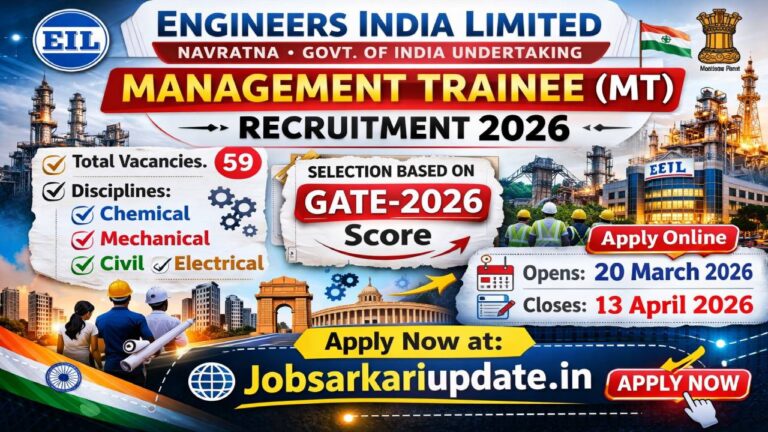
EIL Management Trainee Recruitment 2026 Through GATE – Full Details & Apply Online EIL Management Trainee Recruitment 2026 through GATE...
Read Full Details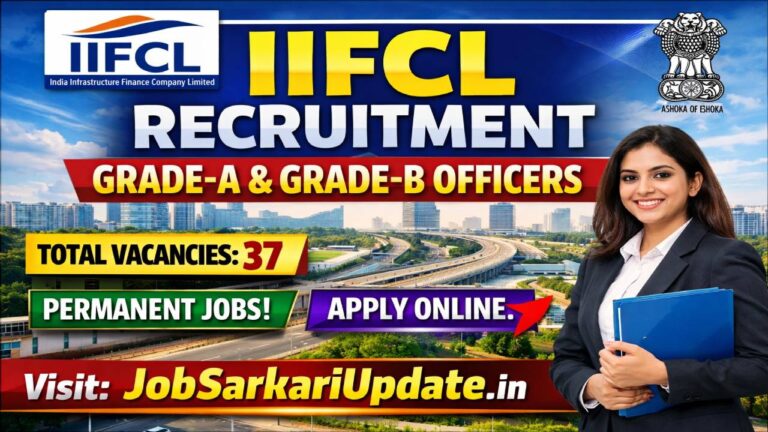
IIFCL Recruitment 2026 – Assistant Manager & Manager Grade-A/B Apply Online IIFCL Recruitment 2026 has been officially announced by India...
Read Full Details
UP B.Ed. JEE 2026 – Overview, Eligibility, Exam Pattern & Apply Online UP B.Ed. JEE 2026 has been officially announced...
Read Full Details
SECL Apprenticeship 2026-27 – Overview, Eligibility & Apply Online SECL Apprenticeship 2026-27 has been officially announced by South Eastern Coalfields...
Read Full Details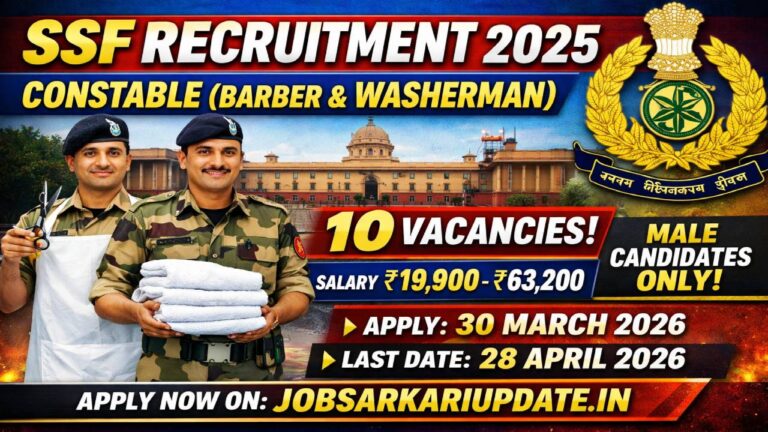
SSF Constable Barber Washerman Recruitment 2025 – Overview, Eligibility & Apply Online SSF Constable Barber Washerman Recruitment 2025 has been...
Read Full Details Follow WhatsApp Channel