



IBPS Clerk 2026 - Quick Summary: IBPS has released the CRP CSA-XVI notification for approx. 6,000+ Customer Service Associate vacancies....
Read Full DetailsJHTET Syllabus 2026: Paper 1 & 2 Subject-Wise Topics
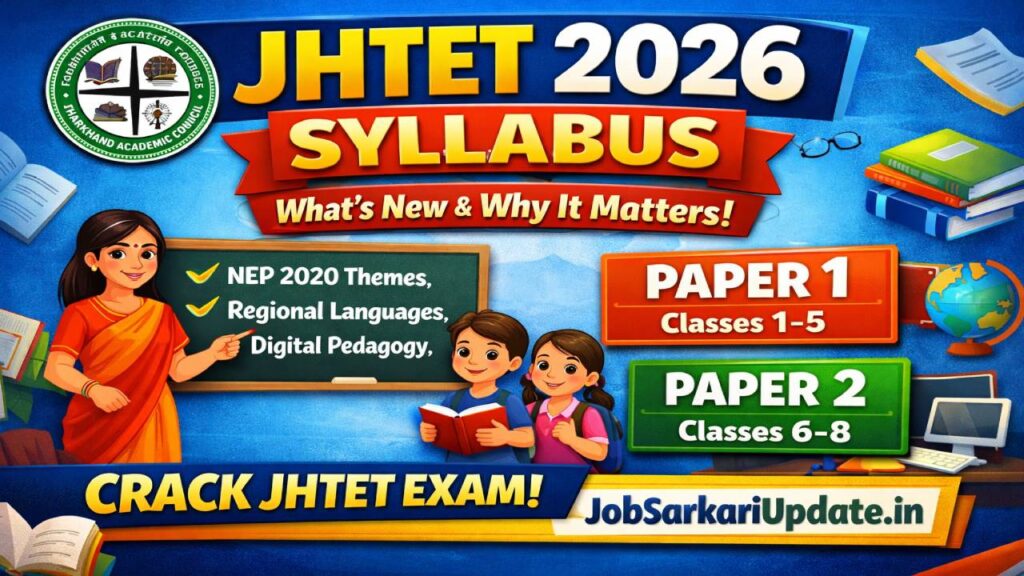
📘 JHTET 2026 Syllabus – What’s New & Why It Matters
The JHTET Syllabus 2026 Paper 1 and 2 subject-wise breakdown has been officially released by the Jharkhand Academic Council (JAC). Unlike previous years, the 2026 syllabus places stronger emphasis on National Education Policy (NEP) 2020 themes, multilingual pedagogy, and regional language proficiency. This exam determines eligibility for teaching positions in Jharkhand’s government schools — both primary (classes 1–5) and upper primary (classes 6–8).
This guide goes beyond the PDF. We explain each section: Child Development & Pedagogy, regional languages (Panchpargania, Kurmali, Bengali, Urdu), EVS, Social Science, and the newly integrated digital pedagogy topics. Whether you are aiming for Paper 1 or Paper 2, understanding the JHTET syllabus 2026 structure is the first step toward scoring above the qualifying marks.
📢 Expert note: The exam will test not just memorization but application-based understanding of NEP 2020, NCF-FS, and inclusive classroom strategies. Focus on “how to teach” rather than just “what to teach”.
📋 JHTET 2026 Syllabus – Exam Structure Overview
| Paper | Level | Compulsory Sections | Regional Language Options | Pedagogy Focus |
|---|---|---|---|---|
| Paper 1 | Primary (Class 1–5) | Child Dev. & Pedagogy, Language 1 (Hindi), Language 2 (Regional), EVS, Mathematics | Panchpargania, Kurmali, Bengali, Urdu | NEP-2020, NCF-FS, activity-based learning |
| Paper 2 | Upper Primary (Class 6–8) | Child Dev. & Pedagogy, Language 1 (Hindi), Language 2 (Regional), Social Science / Science & Maths | Panchpargania, Kurmali, Bengali, Urdu | NEP-2020, NCF-SE, ICT integration, inclusive education |
The Jharkhand TET is a state-level eligibility test. Qualifying it is mandatory for recruitment in JEPC (Jharkhand Education Project Council) and other government-aided schools. The syllabus reflects the state’s commitment to mother-tongue-based multilingual education — hence the inclusion of four regional languages as the second language paper.
📅 JHTET 2026 Exam Timeline (Tentative)
| Event | Date (Expected) |
|---|---|
| Syllabus Release | March 2026 (Already released) |
| Online Application Start | To be notified |
| Last Date to Apply | To be notified |
| Admit Card Release | To be notified |
| JHTET 2026 Exam | To be notified |
⚠️ All dates are tentative. Candidates must regularly check the official JAC website for updates. This information is for syllabus planning only.
Even though application dates are not yet announced, the syllabus is available now — which gives aspirants a solid 4–6 months for preparation. Use this window wisely. Do not wait for the notification to start studying the Child Development and Pedagogy topics for JHTET or the regional language grammar sections.
🧠 Child Development & Pedagogy (Paper 1 & 2 – High Weightage)
This section is common for both papers but differs in complexity. Paper 1 focuses on foundational stage (NCF-FS), while Paper 2 covers upper primary (NCF-SE). Questions are conceptual and scenario-based.
| Unit | Key Topics |
|---|---|
| Child Development | Piaget, Vygotsky, Kohlberg; multi-dimensional development; socialization; individual differences |
| Learning Theories | Behaviorism, Cognitivism, Constructivism; how children think and learn |
| Inclusive Education | CWSN, learning disabilities, equitable classroom practices |
| Assessment & Evaluation | CCE, NEP-2020 assessment reforms, Bloom’s Taxonomy, competency-based evaluation |
| Pedagogical Approaches | Child-centered, activity-based, multilingual classrooms, remedial teaching |
Recent trends show 8–10 questions directly from NEP 2020 and NCF 2023. Make sure you understand foundational literacy (FLN) and the 5+3+3+4 structure. Practical case studies — like how to handle a dyslexic child or design a bilingual activity — are now common.
🗣️ Language 2 (Regional Language) – Detailed Syllabus for All Four Options
As per the official PDF, candidates can choose among Panchpargania, Kurmali, Bengali, and Urdu. The exam is conducted in Devanagari script for Panchpargania & Kurmali; Bengali script for Bengali; and Perso-Arabic for Urdu.
📌 Panchpargania Syllabus (Primary & Upper Primary)
| Topic Area | Devnagari script, vowels/consonants, basic grammar (noun, pronoun, verb, tense), folk literature (songs, riddles), simple comprehension, NEP-2020 based mother-tongue pedagogy |
|---|
📌 Kurmali Syllabus
| Topic Area | Language history, dialect, grammar (gender, number, case), lokgeet, lokkatha, sentence construction, teaching in multilingual classrooms |
|---|
📌 Bengali Syllabus (বাংলা)
| Topic Area | Bengali script, sandhi, samas, verb conjugation, famous literature (Tagore, Nazrul), teaching methodology, NEP 2020 provisions for regional languages |
|---|
📌 Urdu Syllabus (اردو)
| Topic Area | Urdu script, grammar (ism, fail, harf), singular/plural, gender, proverbs, teaching challenges in multilingual classrooms, TLM creation |
|---|
For upper primary, the depth increases: literary criticism, history of the language, advanced prosody, and lesson planning in regional medium schools are included. Don’t ignore folk literature — every year 3–4 questions come from lokgeet, lokkatha, and muhavare.
🌿 Paper 1: Environmental Studies (EVS) & Mathematics
| Subject | Syllabus Focus |
|---|---|
| EVS | Family & neighborhood, food & nutrition, water sources, shelter, transport, things we make, EVS pedagogy, activity-based learning, NEP integration |
| Mathematics | Number system, LCM/HCF, fractions, geometry, measurement, data handling, teaching math through concrete objects, diagnostic teaching |
EVS questions are often drawn from local Jharkhand contexts — crops, festivals, water harvesting, tribal lifestyles. Prepare from NCERT EVS textbooks (classes 3–5) and add state-specific examples. Mathematics focuses on pedagogy of numeracy, not just solving sums.
🏛️ Paper 2: Social Science (History, Geography, Polity, Economics)
| Domain | Core Topics |
|---|---|
| History | Sources of history, early societies, Mauryan empire, Mughals, British expansion, 1857 revolt, national movement 1885–1947, post-independence India, Santhal rebellion (special focus) |
| Geography | Solar system, atmosphere, hydrosphere, internal structure of earth, climate, natural resources, agriculture, Jharkhand geography (location, minerals, forests) |
| Polity | Constitution, fundamental rights & duties, state govt, local self-govt (Panchayati Raj), parliamentary system |
| Economics | Livelihood, money & credit, public distribution system, cooperatives, financial literacy, population growth in Jharkhand |
Social Science pedagogy includes critical thinking development, project work, and using local resources. Expect questions like “how would you teach the Santhal rebellion using oral history?”
📊 JHTET Exam Pattern & Selection Process
The selection is purely merit-based on written exam scores. No interview. You need minimum 60% (general) or 55% (OBC/SC/ST/PwD) to qualify.
| Paper | No. of Questions | Marks | Duration | Negative Marking |
|---|---|---|---|---|
| Paper 1 | 150 | 150 | 2.5 hours | No |
| Paper 2 | 150 | 150 | 2.5 hours | No |
All questions are objective type (MCQs). Each section carries roughly 30 marks. The pedagogy section alone can make or break your score — so prioritize Child Development and subject-specific teaching methods.
💰 Salary & Career Growth After JHTET
| Post | Pay Level | Basic Pay | Gross Salary (approx) |
|---|---|---|---|
| Primary Teacher (Paper 1) | Level 6 | ₹35,400 | ₹48,000 – ₹55,000 |
| TGT (Paper 2) | Level 7 | ₹44,900 | ₹58,000 – ₹65,000 |
Besides salary, government teachers receive DA, HRA, travel allowance, and pension benefits under NPS. Career progression includes promotion to headmaster, BEO, or academic resource person. The JHTET certificate is valid for lifetime (as per new NEP guidelines).
🎯 Expert Preparation Tips for JHTET 2026
1. Master the Pedagogy Section First
More than 50% of candidates fail due to pedagogy. Read NCF 2005, NEP 2020 summary, and teaching learning materials (TLM) from DIET publications.
2. Choose Your Regional Language Strategically
If your mother tongue is one of the four (Panchpargania, Kurmali, Bengali, Urdu), pick that. Grammar and folk literature will be easier to score. Otherwise, select the script you are comfortable reading.
3. Solve Previous Year Papers (2019, 2021, 2023)
The exam repeats many concepts from child psychology and EVS. PYQs also reveal the difficulty level of Social Science questions.
4. Use Official Syllabus as a Checklist
Print the JHTET 2026 PDF and tick each topic as you complete it. Leave no sub-point — especially in “Language 2” and “Inclusive Education”.
5. Join a Mock Test Series (Bilingual)
Since there is no negative marking, attempt all questions. But mocks will help you manage time — 150 questions in 150 minutes is tight.
❓ Frequently Asked Questions (FAQs) – JHTET Syllabus 2026
- 1. Is the JHTET syllabus different for Paper 1 and Paper 2?
- Yes. Paper 1 includes EVS & Mathematics, while Paper 2 includes Social Science OR Science/Maths (depending on your chosen subject). Child Development & Pedagogy is common but more advanced for Paper 2.
- 2. Can I choose any regional language?
- Yes, you can choose any one from Panchpargania, Kurmali, Bengali, or Urdu — regardless of your own background. But choose one you can read and write comfortably.
- 3. Are questions from NEP 2020 guaranteed?
- Yes. The official PDF mentions NEP 2020 in multiple sections (Pedagogy, multilingual classroom, assessment). Expect 5–7 direct questions.
- 4. What is the passing marks for JHTET 2026?
- General: 60% (90/150). OBC/SC/ST/PwD: 55% (82.5/150).
- 5. Does the syllabus include topics from NCERT only?
- Mostly NCERT, but EVS and Social Science include Jharkhand-specific contexts (Santhal rebellion, local crops, tribes).
- 6. Is there any practical or viva in JHTET?
- No. Only written MCQ exam. No interview for TET qualification.
- 7. Can final year B.Ed students apply?
- Yes, if you will complete your B.Ed/D.El.Ed before the result declaration. However, check the final notification when released.
- 8. Which books are best for Kurmali language?
- Refer to “Kurmali Vyakaran aur Rachna” by state textbooks, and local folk literature collections. No single NCERT book exists — rely on syllabus topics.
- 9. How many times can I attempt JHTET?
- No limit. Once qualified, the certificate is valid for lifetime.
- 10. Will there be a separate syllabus for Urdu in Paper 2?
- Yes — Urdu Paper 2 includes advanced grammar (isam marfa/nakira, fail lazim/muta’addi), literature (Premchand’s “Bewah”, Krishan Chander), and teaching methods for upper primary.
📌 Important Instructions:
✔ This article is based on the official JHTET 2026 syllabus PDF released in March 2026.
✔ All dates (exam, application) are tentative. Always verify from the official JAC website.
✔ No information here should be considered as final recruitment notification. This is for syllabus preparation only.
✔ Candidates are advised to download the full syllabus PDF from the official Jharkhand Academic Council portal.
✔ This article is based on the official JHTET 2026 syllabus PDF released in March 2026.
✔ All dates (exam, application) are tentative. Always verify from the official JAC website.
✔ No information here should be considered as final recruitment notification. This is for syllabus preparation only.
✔ Candidates are advised to download the full syllabus PDF from the official Jharkhand Academic Council portal.
Important Links
| Download Notification | Click Here |
| Official Website | Click Here |
| Exam Syllabus | Click Here |
Recent Jobs
Check out our latest job postings
782 Jobs Available
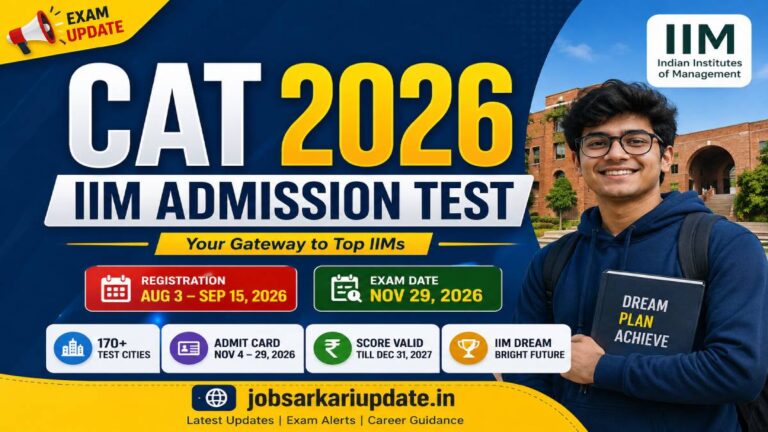
CAT 2026 - Quick Summary: IIMs will conduct Common Admission Test (CAT) 2026 on November 29, 2026. Registration opens August...
Read Full Details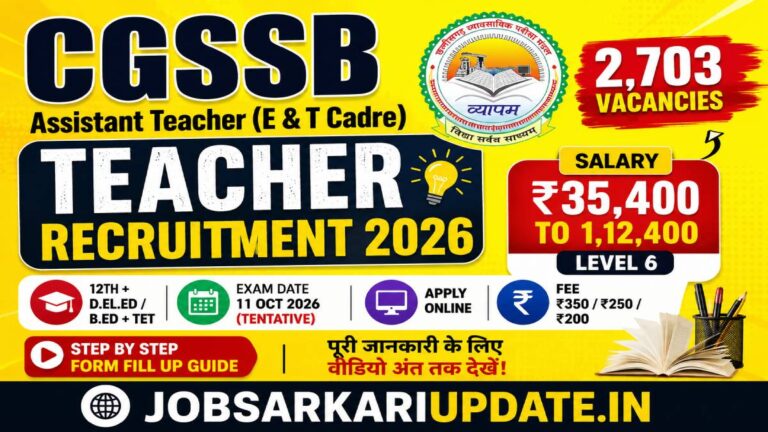
CGSSB Assistant Teacher 2026 - Quick Summary: Chhattisgarh Staff Selection Board has released notification for 2292 Assistant Teacher posts (E...
Read Full Details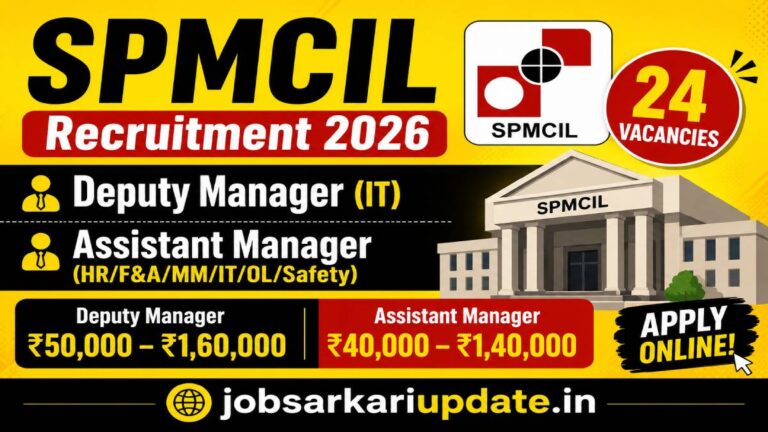
SPMCIL Recruitment 2026 - Quick Summary: Security Printing & Minting Corporation of India has released 24 vacancies for Deputy Manager...
Read Full Details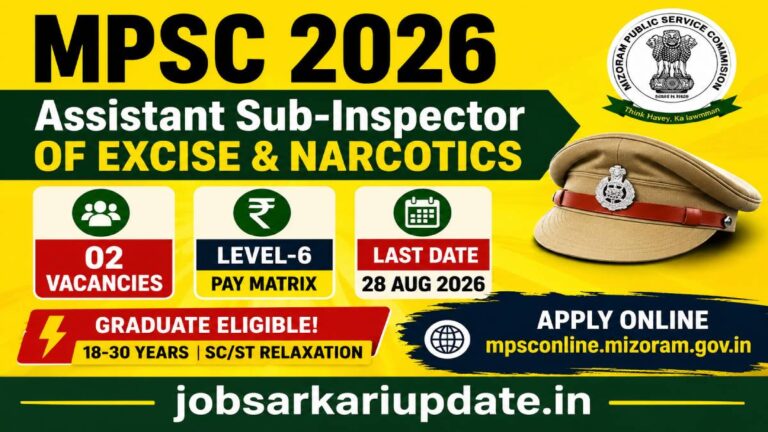
MPSC Excise ASI 2026 - Quick Summary: Mizoram Public Service Commission has confirmed 2 vacancies for Assistant Sub-Inspector of Excise...
Read Full Details
Delhi Police Physical Admit Card 2026 - Quick Summary: Delhi Police has released Physical PET/PMT admit card for Constable (Executive),...
Read Full Details